
Economic Substance Regulations in Bahrain: The Full Compliance Checklist
ESR is the obligation most Bahraini companies discover late, because it is triggered by a code on your Commercial Registration rather than by anything you do deliberately. Some entities are in scope without ever having intended to be.

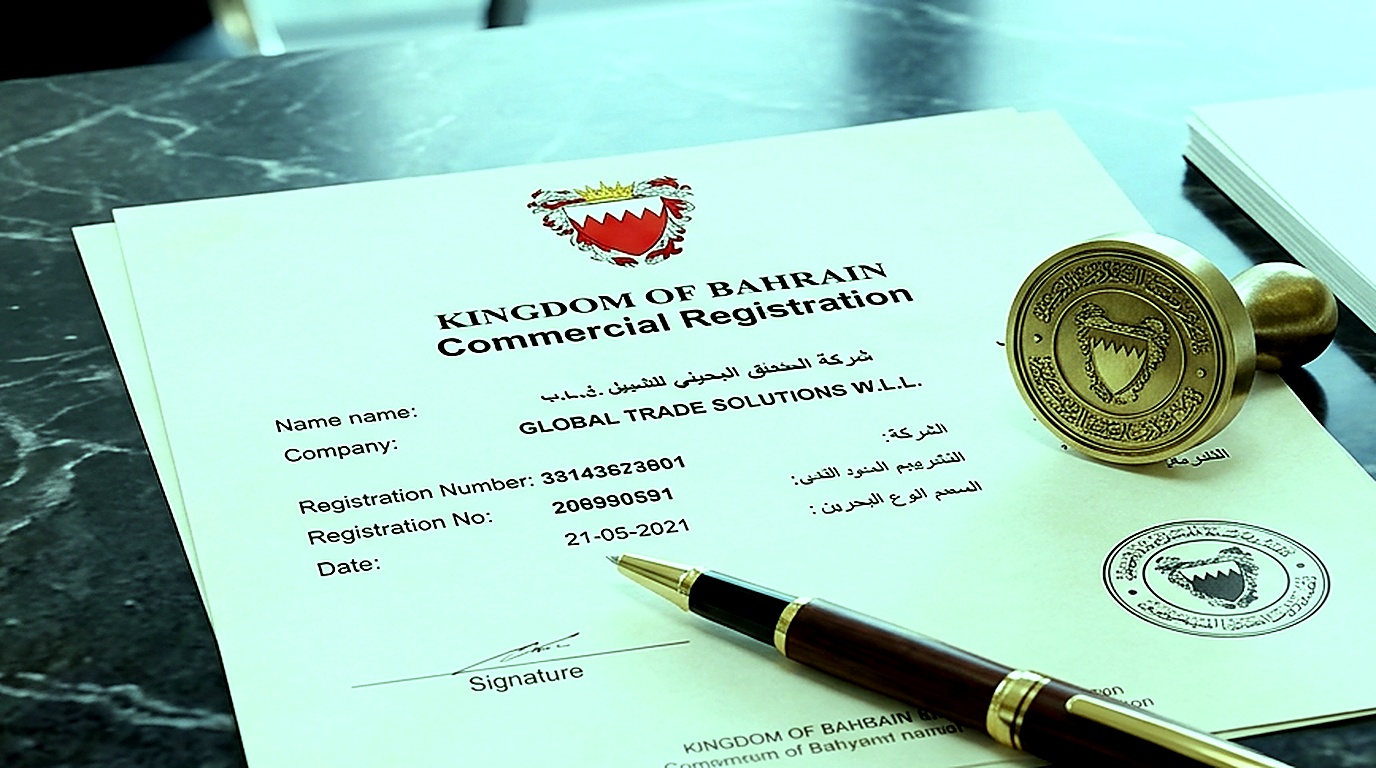
Bahrain's Economic Substance Regulations require entities carrying out specified relevant activities to demonstrate real economic presence in Bahrain and to file an annual return. The rules apply under Ministerial Order No. 106 of 2018 for non-financial commercial activities, and under CBB Directive OG/499/2018 for regulated financial activities, both effective from 1 January 2019.
Relevant activities include distribution and service centres, headquarters, holding companies, leasing, shipping, intellectual property, banking, financing and insurance. Returns are filed through the NBR's ITIES portal, generally within three months of financial year end. Penalties reach BHD 100,000 and can include suspension or termination of the Commercial Registration.
- Legal basis
- MO No. 106 of 2018
- Effective from
- 1 Jan 2019
- Filing portal
- ITIES (NBR)
- Typical deadline
- 3 months after FY end
- Max penalty
- BHD 100,000
Why the rules exist
Bahrain introduced economic substance requirements to meet the European Union's criterion 2.2 and the OECD BEPS Action 5 minimum standard on harmful tax practices. The concern is geographically mobile activity — business that could be located anywhere and is placed in low-tax jurisdictions for tax reasons rather than commercial ones.
The response is not to tax that activity. It is to require that if you earn income from such activity in Bahrain, you must genuinely do it in Bahrain: real people, real premises, real decisions taken here.
The relevant activities
Scope is defined by activity, and on 3 June 2020 the Ministry published a list of Commercial Registration activity codes deemed covered. If any of these appear on your CR, you are presumptively in scope.
| Activity | Regulator | Typical profile |
|---|---|---|
| Distribution and service centres | MOIC | Group service entities, regional distribution |
| Headquarters | MOIC | Head office or management office functions |
| Holding companies | MOIC | Entities holding shares in group companies |
| Leasing (unregulated) | MOIC | Equipment and asset leasing outside CBB licence |
| Shipping | MOIC | Water transportation and shipping agencies |
| Intellectual property | MOIC | IP holding and licensing to related parties |
| Courier, logistics and transport of goods | MOIC | Per the published CR code list |
| Renting activities | MOIC | Per the published CR code list |
| Banking | CBB | CBB-licensed banks |
| Financing companies | CBB | CBB-licensed finance businesses |
| Insurance | CBB | CBB-licensed insurers |
| Investment business firms | CBB | CBB-licensed investment businesses |
Scope follows your CR activity codes, not your actual operations — and it also follows your actual operations even where the code is absent. The guidance is explicit that entities should assess what they genuinely do, not merely what their CR says. A holding company registered with a generic "investment" code is a common inadvertent case.
The two-part substance test
In-scope entities that earn income from a relevant activity must satisfy both limbs.
Part one: core income-generating activities in Bahrain
The activity that actually produces the income must be carried out in Bahrain. The guidance assesses this through three indicators:
- Adequate operating expenditure incurred in Bahrain, proportionate to the activity.
- Adequate qualified employees physically present in Bahrain — not nominal appointments.
- Physical office space in Bahrain appropriate to the activity.
Part two: direction and management in Bahrain
The entity must be directed and managed from Bahrain. In practice this means:
- Board meetings held in Bahrain at adequate frequency.
- A quorum of directors physically present at those meetings.
- Strategic decisions actually taken in those meetings, not ratified after the fact.
- Minutes and records kept in Bahrain.
The most common failure is board governance on paper. A holding company whose sole director signs resolutions by email from abroad, with no meetings held in Bahrain and no minutes retained locally, will not satisfy part two — regardless of how well the first limb is documented. Substance is demonstrated through evidence of decisions, not through assertions of them.
Filing: the ITIES route
Filing was originally made to the Ministry directly. Since 2021 it has moved to the International Tax Information Exchange System (ITIES), a portal operated by the National Bureau for Revenue, which also handles FATCA and CRS reporting.
- Register the entity on ITIES. Entities that previously filed manually must refile through the portal — manual submissions are no longer accepted.
- Determine the reportable period, normally your financial year.
- Complete the ES annual return covering the relevant activity, income earned, and the evidence supporting both limbs of the test.
- Submit within the prescribed window, generally three months from financial year end.
- Ensure the CR is active and free of other violations at the time of submission — the Ministry has refused filings where the CR carried outstanding violations.
For CBB-regulated entities the equivalent report is filed with the CBB within three months of financial year end.
The Ministerial Order does not itself fix a filing deadline, and the Ministry has historically issued circulars setting specific windows — one year running from mid-August to mid-September. Treat the three-month convention as the planning assumption, but confirm the current year's window through the Ministry's circular rather than assuming it repeats. The Ministry has also confirmed it will no longer grant extensions for the audited financial statements that support the filing.
Penalties
Failure to file, or failure to meet the substance requirements, exposes the entity to an escalating range of consequences:
- Warning notices recorded against the Commercial Registration.
- Financial penalties up to BHD 100,000.
- Suspension of the Commercial Registration.
- Termination or striking off of the CR.
- Criminal prosecution in serious cases.
Suspension is the sanction that causes real operational damage, because it stops the entity from trading, renewing licences, and in practice from banking. It is also entirely preventable.
The compliance checklist
- Pull your CR activity codes and compare them against the published list of covered codes. Do this every time the CR is amended.
- Independently assess your actual activities, not just the codes. If you hold shares in group companies, provide group services, license IP or lease assets, you are likely in scope whatever the code says.
- Confirm whether you earned income from the relevant activity in the period. An in-scope entity with no relevant income still files, but the substance test does not bite.
- Document operating expenditure in Bahrain attributable to the activity, with the supporting invoices.
- Evidence qualified employees — contracts, CPR numbers, payroll records, and evidence of what they actually do.
- Evidence premises — lease agreement, municipality registration, and photographs or floor plans where the scale is challenged.
- Fix board governance now. Hold meetings in Bahrain, ensure a quorum attends physically, take real decisions there, and keep signed minutes in Bahrain.
- Register on ITIES and diarise the filing window with a reminder ahead of financial year end, not after.
- Clear any other CR violations before the filing window opens.
- Complete the audit in time. The Ministry requires audited financial statements within six months of year end and no longer extends this for ESR filers.
A note on holding companies
Pure equity holding companies attract reduced substance requirements in many jurisdictions, and Bahrain's guidance recognises a lighter test for entities whose only activity is holding shares. That relief is narrower than owners assume.
If the holding company does anything beyond holding — lends to group companies, licenses IP, provides management services, employs staff who perform functions — it moves toward the full test. The distinction is worth establishing properly and documenting, because it is the difference between a modest filing and a substantive evidence exercise.
Key takeaways
- ESR applies to entities carrying out specified relevant activities, and scope is determined by your CR activity codes and by what you actually do.
- The test has two limbs: core income-generating activity in Bahrain (expenditure, employees, premises) and direction and management in Bahrain (real board meetings, quorum present, minutes retained locally).
- Filing is through the NBR's ITIES portal, generally within three months of financial year end; manual submissions are no longer accepted.
- Penalties reach BHD 100,000 and include CR suspension or termination — the operational consequence is worse than the fine.
- Board governance on paper is the most common failure. Decisions must actually be taken in Bahrain, with evidence.
- Complete the statutory audit in time — the Ministry no longer extends the audited financial statements deadline for ESR filers.
Unsure whether your CR puts you in scope?
We assess scope against the published activity code list, review your board governance and evidence file, and prepare and submit the ITIES return.
General information only, not legal or tax advice on specific facts. Requirements reflect Ministerial Order No. 106 of 2018, MOIC guidance and CBB Directive OG/499/2018 as understood at the date of publication. Filing windows are set by Ministry circular and should be confirmed for the current year.
Frequently Asked Questions
Essential regulatory answers and statutory explanations regarding this topic in Bahrain.
✦ SUBSTANCE
What are Bahrain's Economic Substance Regulations?
▼
ESR requires entities carrying out specified relevant activities in Bahrain to demonstrate adequate economic presence in the Kingdom and to file an annual return. The rules apply under Ministerial Order No. 106 of 2018 for non-financial commercial activities and CBB Directive OG/499/2018 for regulated financial activities, both effective from 1 January 2019.
✦ SUBSTANCE
Which activities are covered by Bahrain ESR?
▼
Distribution and service centres, headquarters, holding companies, unregulated leasing, shipping, intellectual property, courier and logistics activities, and renting activities fall under the MOIC. Banking, financing companies, insurance and investment business firms fall under the CBB. The Ministry published a list of covered CR activity codes in June 2020.
✦ SUBSTANCE
How do I know if my company is in scope?
▼
Check your CR activity codes against the published list, and separately assess what your entity actually does. Scope follows both. An entity holding shares in group companies, providing group services, licensing IP or leasing assets is likely in scope regardless of the code recorded on its CR.
✦ SUBSTANCE
Where and when is the ESR return filed?
▼
Through the NBR's International Tax Information Exchange System (ITIES) portal, generally within three months of financial year end. Manual submissions are no longer accepted. The specific window each year is set by Ministry circular and should be confirmed rather than assumed.
✦ SUBSTANCE
What are the penalties for ESR non-compliance in Bahrain?
▼
Consequences escalate from warning notices against the Commercial Registration to financial penalties of up to BHD 100,000, suspension of the CR, termination or striking off of the CR, and criminal prosecution in serious cases. CR suspension is usually the most damaging, because it stops the entity from trading and renewing licences.
✦ SUBSTANCE
What is the most common way companies fail the substance test?
▼
Board governance that exists only on paper. A company whose directors sign resolutions remotely from abroad, with no meetings held in Bahrain, no physical quorum and no locally retained minutes, will not satisfy the direction and management limb however well its expenditure, staffing and premises are documented.